Most of students search over Google for Haryana Board (HBSE) Important Questions 2026. Here is the Main reason because HBSE Board Says that in HBSE Exam 2026 (last 3 Years of Questions will Repeat) so that here are the selected List of Questions of Haryana Board For Class 12.
HBSE Class 9 Math MCQ Important Question Answer 2026
Chapter 1 – Number Systems
1. Which of the following numbers is an irrational number ? Most Important
(A) 
(B) 
(C) 
(D) 
Ans – (C)
2. The value of (36)1/2 will be:
(A) 6
(B) 12
(C) 18
(D) 9
Ans – (A) 6
3. Which of the following statement is true?
(A) Every irrational number is a real number.
(B) Every real number is an irrational number.
(C) is a rational number
(D)  is an irrational number.
Ans – (A) Every irrational number is a real number.
4. Which of the following is an irrational number?
(A) 5.764
(B) 5.676776777….
(C)
(D) 5.764764…
Ans – (B) 5.676776777….
5. Every integer is a rational number:
(A) True
(B) False
(C) Not Always, Some Times
(D) None of these
Ans – (A) True
6. By which English alphabet the collection of rational numbers is denoted ?
(A) N
(B) W
(C) Q
(D) Z
Ans – (C) Q
7. The rational number between 1 and 2 will be:
(A) 0.5
(B) 
(C) 
(D) 
Ans – (D)
8. How many rational numbers between any two given rational there ?
(A) 2
(B) 1
(C) Infinitely many
(D) 0
Ans – (C) Infinitely many
9. Which of the following numbers is an irrational number?
(A) 1.101001000…….
(B) 0.376
(C) 0.7474
(D) 
Ans – (A) 1.101001000…….
10. Which of the following is not a rational number?
(A) 
(B) 0
(C) 
(D) 
Ans – (A)
11. Which of the following is not a rational number?
(A)
(B) 0
(C)
(D)
Ans – (A)
12. Value of 163/4
(A) 4
(B) 12
(C) 8
(D) 48
Ans – (C) 8
13. Express  in
in  form:
form:
(A) 
(B) 
(C) 
(D) 
Ans – (A)
14. Which of the following number is not in between  and
and  ?
?
(A) 
(B) 
(C) 
(D) 
Ans – (A)
Chapter 2 – Polynomials
1. Which of the following algebraic expressions is a polynomial?
(A) x2 + 5x + 6
(B) 
(C) 
(D) 
Ans – (A) x2 + 5x + 6
2. The zero of polynomial p(x) = 2x + 5 will be:
(A) 
(B) 
(C) 
(D) 
Ans – (B)
3. Which of the following algebraic expressions is a polynomial ?
(A) y5/3+6
(B) 
(C) 
(D) X3 + 5
Ans – (D) X3 + 5
4. The coefficient of x3 in polynomial 2 – x3 + x5+9x7 will be:
(A) 2
(B) -1
(C) 1
(D) 9
Ans – (B) -1
5. Which of the following algebraic expressions is a polynomial?
(A) x1/4 + 6
(B) 
(C) 
(D) x3/2 + 2x + 6
Ans – (B)
6. Which expression is a polynomial from the following algebraic expressions?
(A)
(B) 
(C) 
(D) x1/3 + 6
Ans – (C)
7. The degree of polynomial 2 – y2 – y3 + 2y8 will be:
(A) 8
(B) 3
(C) 2
(D) 4
Ans – (A) 8
8. The coefficient of x2 in the polynomial 2 – x2 + x3
(A) 1
(B) -1
(C) 2
(D) 3
Ans – (B) -1
9. How many terms are there in polynomial 5y6 – 4y2 – 6y + 6 ?
(A) 6
(B) 5
(C) 4
(D) 2
Ans – (C) 4
10. The zero of polynomial p(x) = 2x + 1 will be:
(A) 
(B) 
(C) 2
(D) 1
Ans – (A)
11. Which of the type is polynomial t2 – 4 ?
(A) Binomial
(B) Monomial
(C) Trinomial
(D) None of these
Ans – (A) Binomial
12. The degree of 5x3 + 4x2 + 7x is :
(A) 1
(B) 2
(C) 3
(D) 4
Ans – (C) 3
13. The value of (99)3 is:
(A) 970289
(B) 970299
(C) 970389
(D) 970489
Ans -(B) 970299
14. The factor of 2x2 + 7x + 3 is:
(A) (2x + 1)(x + 3)
(B) (2x + 3)(3x – 2)
(C) (2x – 1)(x + 4)
(D) (2x + 1)(2x – 1)
Ans – (A) (2x + 1)(x + 3)
15. Fill in the blank from the following: (am)n = _________.
(A) am+n
(B) am-n
(C) amn
(D) (mn)a
Ans – (C) amn
16. Fill in the blank: (x + y)2 = x2 + _________ + y²
(A) 3xy
(B) 2x
(C) 2xy
(D) 2y
Ans – (C) 2xy
17. Factors of 4y2 – 4y+1 is :
(A) (2y + 1)2
(B) (4y – 1)2
(C) (2y – 1)2
(D) (2y-2)2
Ans – (C) (2y – 1)2
18. Factors of 27 – 125a3 – 135a + 225a2 is:
(A) (3 + 5a)2
(B) (3a + 5)3
(C) (3a – 5)2
(D) (3 – 5a)3
Ans – (D) (3 – 5a)3
19. The value of k is, if x – 1 is a factor of p(x) = kx2 –  + 1 ?
+ 1 ?
(A) 
(B) 
(C) 
(D) 
Ans – (C)
Chapter 3 – Coordinate Geometry
1. In which quadrant the point (6, -7) lies?
(A) First
(B) Second
(C) Third
(D) Fourth
Ans – (D) Fourth
2. In which quadrant point (-1, -3) lies:
(A) I quadrant
(B) II quadrant
(C) III quadrant
(D) IV quadrant
Ans – (C) III quadrant
3. Graph of x = 2 is a line :
(A) Parallel to x-axis
(B) Parallel to y-axis
(C) Passes through origin
(D) None
Ans – (B) Parallel to y-axis
4. Point (-1, 4) lies on which quadrant ?
(A) I
(B) IV
(C) II
(D) III
Ans – (C) II
5. Point (0, -3) lies on:
(A) x-axis
(B) y-axis
(C) 1st quadrant
(D) 2nd quadrant
Ans – (B) y-axis
6. What is abscissa and ordinate of point (-4, -3)?
(A) x = – 4, y = – 3
(B) x = – 2, y = – 4
(C) x = 4, y = 3
(D) None
Ans – (A) x = – 4, y = – 3
Chapter 4 – Linear Equations in Two Variables
1. The value of K will be, if x = 2, y = 1 is a solution of the equation 2x + 3y = K :
(A) 2
(B) 4
(C) 9
(D) 7
Ans – (D) 7
2. Express the linear equation –2x + 3y = 6 in the form of ax + by + c = 0 and indicate the value of C:
(A) -2
(B) -6
(C) 3
(D) 6
Ans – (B) -6
3. The cost of a notebook is twice the cost of a pen. Write a linear equation in two variables to represent this statement.
(A) 
(B) x + 2y = 0
(C) 2x + y = 0
(D) x – 2y = 0
Ans – (D) x – 2y = 0
4. The solution of the equation x – 2y = 4 from the following will be:
(A) (0, 2)
(B) (0, 4)
(C) (4, 0)
(D) (2, 0)
Ans – (C) (4, 0)
5. How many solutions a linear equation in two variables can have at most?
(A) One
(B) Two
(C) Three
(D) Infinitely many
Ans – (D) Infinitely many
6. Compare of 6x+7 with the equation ax + by + c = 0 , the value of a is :
(A) 0
(B) 6
(C) 1
(D) 7
Ans – (B) 6
7. The solution of equation x – 2y = 4 is:
(A) (0, 2)
(B) (4, 0)
(C) (1, 1)
(D) 12, 0)
Ans – (B) (4, 0)
8. Point (4, 1) satisfies to which equation of line?
(A) x + 2y = 5
(B) x + 2y = – 6
(C) x + 2y = 6
(D) x + 2y= 16
Ans – (C) x + 2y = 6
9. Write equation 4 = 5x – 3y in the form of ax + by + c = 0 and indicate the value of c:
(A) 5
(B) -3
(C) 0
(D) -4
Ans – (D) -4
10. If the point (2, 1) lies on the graph of the equation 2x + 3y = k, then value of k will be:
(A) 8
(B) 6
(C) 7
(D) – 7
Ans – (C) 7
Chapter 5 – Introduction to Euclid’s Geometry
NO MCQ’s From this Chapter
Chapter 6 – Lines and Angles
1. How many lines can pass through two distinct given points?
(A) A unique
(B) Two
(C) Infinite
(D) No line
Ans – (A) A unique
2. The sum of two angles is 180°. Then these are called as:
(A) Acute angle
(B) Complementary angles
(C) Supplementary angles
(D) Reflex angles
Ans – (C) Supplementary angles
3. Which of the following statement is false?
(A) Two distinct lines cannot have more than one point in common.
(B) A terminated line can be produced indefinitely on both sides.
(C) Only one line can pass through a single point.
(D) If two circles are equal then their radii are equal.
Ans – (C) Only one line can pass through a single point.
4. If a || b, b || c then which one is true ?
(A) a ⊥ c
(B) a ⊥ b
(C) a || c
(D) b ⊥ c
Ans – (C) a || c
5. A, B, C are three points lies on a line, B lies between A and C, then which one is true?
(A) AB + BC = AC
(B) AB – BC = AC
(C) AB+ AC = BC
(D) AB+ BC = AB
Ans – (A) AB + BC = AC
6. A part of a line with two end points is called as:
(A) Line
(B) Ray
(C) Line Segment
(D) Vertex
Ans – (C) Line Segment
7. If two lines _________ each other, then the vertically opposite angles are equal.
(A) Intersecting
(B) Parallel
(C) Perpendicular
(D) None of these
Ans – (A) Intersecting
8. The measure of an acute angle is :
(A) Between 0° and 90°
(B) Between 90° and 180°
(C) Between 180° and 270°
(D) Above 270°
Ans – (A) Between 0° and 90°
9. If a ray stands on a line, then the sum of two adjacent angles so formed will be:
(A) 360°
(B) 180°
(C) 120°
(D) 90°
Ans – (B) 180°
Chapter 7 – Triangles
1. “Two triangles are congruent if two sides and the included angle of one triangle are equal to the two sides and the included angle of the other triangle.” Which rule of congruence it is ?
(A) AAS
(B) ASA
(C) SAS
(D) SSS
Ans – (C) SAS
2. The altitude and base of a triangle are 8 cm and 3 cm respectively. Then its area will be :
(A) 24 cm
(B) 12 cm
(C) 12 cm2
(D) 24 cm2
Ans – (C) 12 cm2
3. Two sides of a triangle are 60 cm and 100 cm. If its perimeter is 300 cm. Then the third side will be:
(A) 60 cm
(B) 100 cm
(C) 140 cm
(D) 40 cm
Ans – (C) 140 cm
4. “Two right angled triangles are congruent, if the hypotenuse and a side of one triangle is respectively equal to the hypotenuse and a side of the other triangle”. Which of the following condition for congruency triangles follows here?
(A) SAS
(B) RHS
(C) ASA
(D) AAS
Ans – (B) RHS
5. If the height of a triangle is 10 cm and base is 5 cm, then its area is :
(A) 50 cm2
(B) 25 cm2
(C) 15 cm2
(D) 20 cm2
Ans – (B) 25 cm2
6. Each angle is not right angle:
(A) Rectangle
(B) Square
(C) Triangle
(D) Cube
Ans – (C) Triangle
7. Sum of any two sides of a triangle is ______ than the third side.
(A) Smaller
(B) Greater
(C) Equal
(D) None of these
Ans – (B) Greater
8. The sum of angles of a triangle is:
(A) 120°
(B) 180°
(C) 270°
(D) 360°
Ans – (B) 180°
9. The area of right triangle is :
(A) x Base x Height
(B) 2x Base x Height
(c)  x Base x Height
(D) 3 x Base x Height
Ans – (A) x Base x Height
10. If a, b and c are sides of a triangle. The semi-perimeter of triangle will be:
(A) 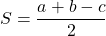
(B) 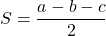
(C) 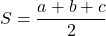
(D) 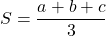
Ans – (C)
11. If point M, is the mid point of hypotenuse AC of right angled ΔABC, then BM = :
(A) AC
(B) AB
(C) BC
(D) None of these
Ans – (A) AC
12. In a pair of set square angle of one triangle are :
(A) 30°, 40°, 100°
(B) 60°, 30°, 90°
(C) 30°, 30°, 45°
(D) None of these
Ans – (B) 60°, 30°, 90°
13. Two sides of a triangle are 8 cm and 11 cm having perimeter 32 cm, then its semi perimeter is:
(A) 4 cm
(B) 13 cm
(C) 14 cm
(D) 16 cm
Ans – (D) 16 cm
14. The sides of a triangular plot are in the ratio of 3 : 5 : 7 and its perimeter is 300 m that area of plot are :
(A) 1500 m2
m2
(B) 1200 m2
(C) 1800 m2
(D) 1600 m2
Ans – (A) 1500 m2
15. Perimeter of an isosceles triangle is 30 cm and its equal sides are of 12 cm, then area of the triangle is :
(A)  cm2
cm2
(B)  cm2
cm2
(C)  cm2
cm2
(D)  cm2
cm2
Ans – (C) cm2
Chapter 8 – Quadrilaterals
1. On joining the points (0, 0), (0, 2), (2, 2) and (2, 0) we obtain a :
(A) Square
(B) Rectangle
(C) Rhombus
(D) Parallelogram
Ans – (A) Square
2. If diagonals of quadrilateral bisect each other at right angles, then it is a :
(A) Parallelogram
(B) Square
(C) Rhombus
(D) Trapezium
Ans – (C) Rhombus
3. The angles of a quadrilateral are in the ratio 3 : 4 : 5 : 6. The respective angles of the quadrilateral are:
(A) 60°, 80°, 100°, 120°
(B) 120°, 100°, 80°, 60°
(C) 120°, 60°, 80°, 100°
(D) 80°, 100°, 120°, 60°
Ans – (A) 60°, 80°, 100°, 120°
Chapter 9 – Circles
1. Angle in a semicircle is :
(A) Complementary
(B) Obtuse
(C) Right
(D) Acute
Ans – (C) Right
2. The length of the complete circle is called as :
(A) Diameter
(B) Circumference
(C) Radius
(D) Arc
Ans – (B) Circumference
3. One and only one circle can pass through from how much non-collincar points?
(A) Three
(B) Four
(C) Five
(D) Six
Ans – (A) Three
4. The centre of a circle lies in ________ of the circle :
(A) exterior
(B) circumference
(C) interior
(D) perimeter
Ans – (C) interior
Chapter 10 – Heron’s Formula
No MCQ From this Chapter
Chapter 11 – Surface Areas and Volumes
1. What is the curved surface area of a right circular cone whose slant height is 10 cm and base radius is 7 cm ?
(A) 220 cm2
(B) 110 cm3
(C) 132 cm3
(D) 232 cm3
Ans – (A) 220 cm2
2. The volume of a right circular cone whose radius 7 cm and height 3 cm will be:
(A) 154 cm3
(B) 154 cm2
(C) 282 cm2
(D) 284 cm
Ans – (A) 154 cm3
3. The base radius of a cone is 11.3 cm and curved surface is 355 cm2. Its height is ________. ( Take  )
)
(A) 11 cm
(B) 9 cm
(C) 5 cm
(D) 10 cm
Ans – wrong Options
4. The surface area of a sphere with diameter 14 cm will be:
(A) 28 cm
(B) 28 cm2
(C) 42 cm2
(D) 616 cm2
Ans – (D) 616 cm2
5. The volume of a sphere with radius r will be:
(A) 4πr
(B) 4πr2
(C) 
(D) 
Ans – (D)
6. The volume of a sphere is 524 cm3. The diameter of sphere is :
(A) 4 cm
(B) 5 cm
(C) 3 cm
(D) 6 cm
Ans – wrong options
7. The curved surface area of a hemisphere whose radius is r, will be:
(A) 4πr2
(B) 3πr2
(C) 2πr2
(D) 
Ans – (C) 2πr2
Chapter 12 – Statistics
1. The mean of 10, 7, 13, 20, 15 will be:
(A) 12
(B) 13
(C) 10
(D) 15
Ans – (B) 13
2. The class mark of class interval 180-190 will be:
(A) 185
(B) 180
(C) 190
(D) 370
Ans – (A) 185
3. The mean of first five natural numbers is :
(A) 5
(B) 3
(C) 4
(D) 2
Ans – (B) 3
4. The difference of the highest and lowest values in the data is called as :
(A) Mean
(B) Median
(C) Range
(D) Mode
Ans – (C) Range
5. What is the upper class limit in class interval 20-30 ?
(A) 50
(B) 20
(C) 10
(D) 30
Ans – (D) 30
6. The range of data 40, 20, 36, 60, 56, 88, 50, 80 will be:
(A) 40
(B) 68
(C) 56
(D) 88
Ans – (B) 68
7. The class mark of a class interval is:
(A) 
(B) 
(C) 
(D) 
Ans – (D)
8. Class mark of class 150-160 is :
(A) 145
(B) 310
(C) 10
(D) 155
Ans – (D) 155
9. The heights of 9 students of a class are given (in cm) as follows:
155, 160, 145, 149, 150, 147, 152, 144, 148
The median of this data is :
(A) 150
(B) 147
(C) 149
(D) 148
Ans – (C) 149
10. The marks (out of 10) obtained by 20 students are as follows:
9, 6, 5, 9, 3, 2, 7, 7, 6, 5, 4, 9, 10, 10, 3, 4, 7, 6, 9, 9
The modal marks are:
(A) 7
(B) 9
(C) 3
(D) 10
Ans – (B) 9
निम्न में से कौन त्रिभुजों की सर्वांगसमता की कसौटी नहीं है ?
(A) SSS
(B) SSA
(C) SAS
(D) ASA
Which of the following is not a criterion for congruence of triangles ?
(A) SSS
(B) SSA
(C) SAS
(D) ASA
किसी समबाहु त्रिभुज का प्रत्येक कोण होता है :
(A) 30°
(B) 45°
(C) 60°
(D) 90°
Each angle of any equilateral triangle is:
(A) 30°
(B) 45°
(C) 60°
(D) 90°
एक त्रिभुज की दो भुजाओं की लंबाई 5 सेमी और 1.5 सेमी है। त्रिभुज की तीसरी भुजा की लंबाई नहीं हो सकती :
(A) 3.6 cm
(B) 4.1 cm
(C) 3.8 cm
(D) 3.4 cm
Two sides of a triangle are of lengths 5 cm and 1.5 cm. The length of the thin side of the triangle cannot be:
(A) 3.6 cm
(B) 4.1 cm
(C) 3.8 cm
(D) 3.4 cm
यदि किसी त्रिभुज की दो भुजाएँ बराबर हैं, तो वह कहलाता है:
(A) समबाहु त्रिभुज
(B) विषमबाहु त्रिभुज
(C) समद्विबाहु त्रिभुज
(D) समकोण त्रिभुज
If two sides of a triangle are equal, then it is called:
(A) Equilateral triangle
(B) Scalene triangle
(C) Isosceles triangle
(D) Right angled triangle
शंकु के आयतन का सूत्र होता है :
(Α) πr²h
(Β) 2/3 πr³
(C) 4/3 πr³
(D) πr²h
Volume of the cone is:
(Α) πr²h
(Β) 2/3 πr³
(C) 4/3 πr³
(D) πr²h
10. सबसे छोटी अभाज्य संख्या है :
(A) शून्य
(B) 1
(C) 2
(D) 3
The smallest prime number is:
(A) Zero
(B) 1
(C) 2
(D) 3
11. बारंबारता बंटन:
| वर्ग अन्तराल | 0-5 | 5-10 | 10-20 | 20-25 | 25-30 |
| बारंबारता | 6 | 12 | 10 | 8 | 15 |
का आयत चित्र खींचने के लिए वर्ग 20-25 की समायोजित बारंबारता है :
(A) 6
(C) 2
(B) 12
(D) इनमें से कोई नहीं
To draw a histogram to represent the following frequency distribution:
| Class Interval | 0-5 | 5-10 | 10-20 | 20-25 | 25-30 |
| Frequency | 6 | 12 | 10 | 8 | 15 |
The adjusted frequency for class 20-25 is:
(A) 6
(B) 12
(C) 2
(D) None of these
12. x3 + 3x2 + 2 में x2 का गुणांक है:
(A) 1
1B 3
(C) 2
(D) इनमें से कोई नहीं
The coefficient of x2 in x3 + 3x2 + 2
(A) 1
(B) 3
(C) 2
(D) None of these
x = 1 पर बहुपद x2 – x + 1 का मान ज्ञात कीजिए:
JA1
(B) 2
(C) 3
(D) 0
Find the value of polynomial x2 – x + 1 at x =1:
(A) 1
(B) 2
(C) 3
(D) 0
गोले का आयतन जिसकी त्रिज्या R है:
(Α) 4πR2
(Β) 4πR3
(C) 4/3 πR3
(D) 2/3 πR3
Volume of sphere whose radius is R:
(Α) 4πR2
(Β) 4πR3
(C) 4/3 πR3
(D) 2/3 πR3
त्रिभुज ABC में AB = AC और angle B = 70° तब angle C बराबर है :
(A) 40°
(B) 50°
(C) 60°
(D) 70°
In triangle ABC , AB = AC and angle B = 70° , then angle C is:
(A) 40°
(B) 50°
(C) 60°
(D) 70°
चतुर्भुज के सभी आंतरिक कोणों का योग है :
(A) 180°
(B) 240°
(C) 360°
(D) 300°
Sum of the interior angles of quadrilateral is:
(A) 180°
(B) 240°
(C) 360°
(D) 300°
एक समांतर चतुर्भुज के विकर्ण बराबर हों, तो वह एक _________ है।
(A) समचतुर्भुज
(B) आयत
(C) वर्ग
(D) इनमें से कोई नहीं
In diagonal of a parallelogram are equal, then it is a _________.
(A) Rhombus
(B) Rectangle
(C) Square
(D) None of these
एक ही वृत्तखंड में बने कोण _________ होते हैं।
Angles in the same segment of a circle are _________.
अभिकथन (A): यदि √2 = 1.414, √3 = 1.732 तब √5 = √2 + √3 .
तर्क (R) : धनात्मक संख्या का वर्गमूल हमेशा मौजूद होता है।
(A) (A) और (R) दोनों सत्य हैं और (IR), (A) की सही व्याख्या करता है।
(B) (A) और (R) दोनों सही हैं और (R), (A) की सही व्याख्या नहीं है।
(C) (A) सत्य है लेकिन (IR) असत्य है।
(D) (A) असत्य है लेकिन (12) सत्य है।
Assertion (A): If √2 = 1.414, √3=1.732, then √5 = √2+√3.
Reason (R): Square root of positive number always exists.
(A) Both (A) and (R) are true, (R) is the correct explanation of (A).
(B) Both (A) and (R) are true but (R) is not correct explanation of (A).
(C) (A) is truc but (R) is false.
(D) (A) is false but (R) is true.
अभिकथन (A) : किसी वृत्त की जीवा जो उसकी त्रिज्या से दोगुनी लंबी होती है, वृत्त का व्यास होती है।
तर्क (R) : किसी वृत्त की सबसे लंबी जीवा वृत्त का व्यास होती है।
(A) (A) और (R) दोनों सत्य हैं और (R), (A) की सही व्याख्या है।
(B) (A) और (R) दोनों सत्य हैं लेकिन (R), (A) की सही व्याख्या नहीं है।
(C) (A) सत्य है लेकिन (R) असत्य है।
(D) (A) असत्य है लेकिन (R) सत्य है।
Assertion (A): A chord of a circle, which is twice as long as its radius, is a diameter of the circle.
Reason (R): The longest chord of a circle is a diameter of the circle.
(A) Both (A) and (R) are true and (R) is the correct explanation of (A).
(B) Both (A) and (R) are true but (R) is not correct explanation of (A).
(C) (A) is true but (R) is false.
(D) (A) is false but (R) is true.